You Cannot Delegate Raising a Child.

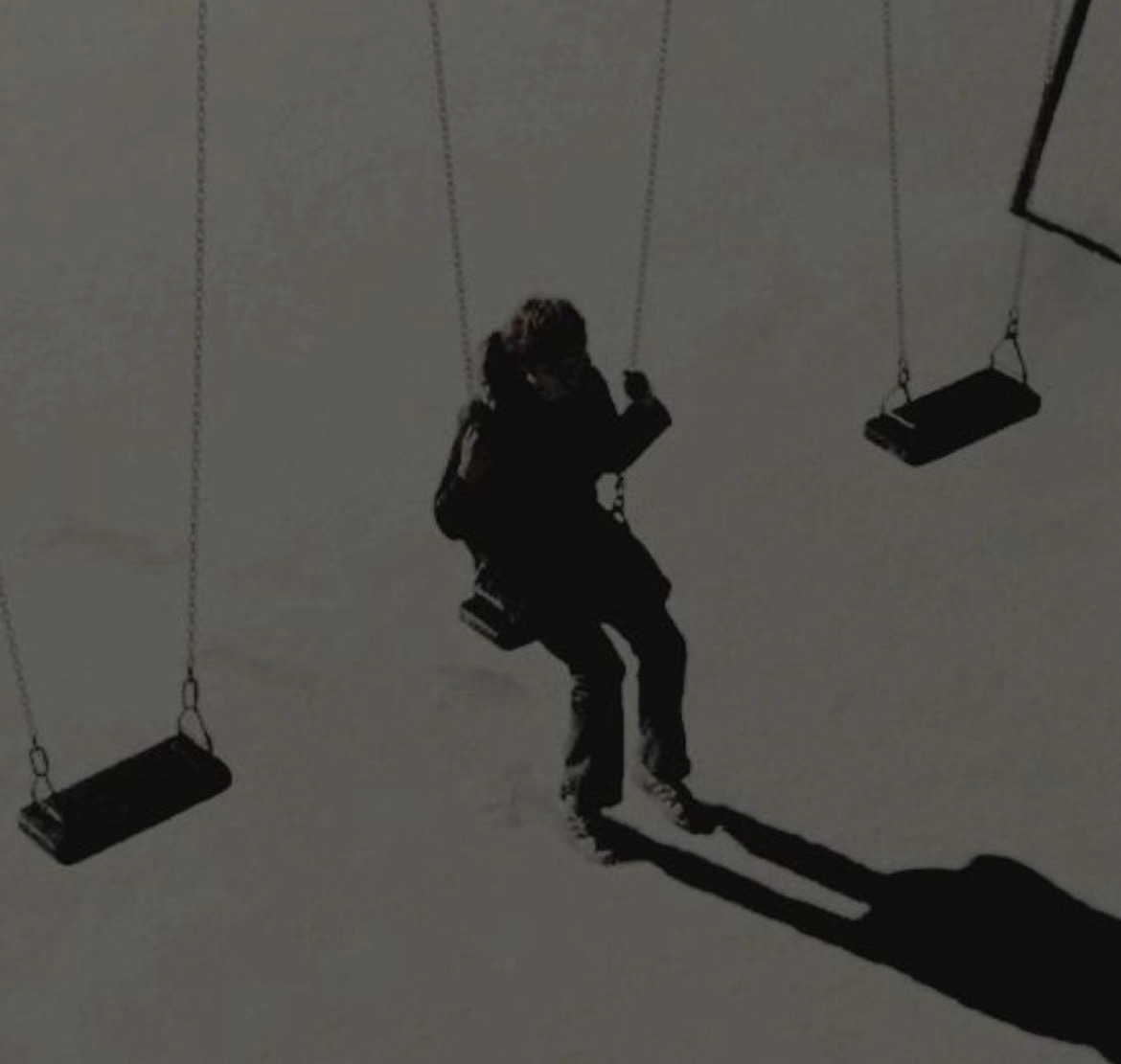
The Roots We Refuse to Be.
Parents are meant to be the foundation of their children’s lives, so why are so many of them quietly outsourcing the job, and then wondering why everything falls apart?
Roots That Should Hold.
There is a quiet crisis unfolding in family homes everywhere, not loud enough to make headlines, not dramatic enough to trend on social media, but deeply and permanently felt by the children living through it. Parents, the people who are supposed to be the strongest roots in a child’s life, are increasingly becoming passive observers in their own children’s upbringing. They are present in the house but absent in the relationship. And the most troubling part? The vast majority of them don’t even recognise it as a problem.
We talk a great deal about education systems, screen addiction, mental health in young people, and the collapse of social values, but we rarely point the conversation back to where it most urgently belongs: the home. Specifically, to the adults who run it.
A tree without strong roots cannot stand. No matter how much sunlight it receives, no matter how fertile the soil around it, if the roots are shallow, the tree will fall.
The same truth applies to a child. Parents are not simply providers of food, shelter, and school fees. They are the first teachers, the first mirror, the first safe place. They are the ones who show a child, through daily, unremarkable, repeated behaviour what the world is, how relationships work, what is acceptable, and what is not. When that foundation is weak, everything built on top of it becomes unstable. And no school, no priest, no coach, no therapist can fully compensate for what was never given at home.
A Scene That Said Everything.
Some time ago I met a father at a social gathering. I have always been someone who observes people quietly, and it did not take long before something caught my attention. His young child was working him with impressive skill cycling through the classic tactics that children instinctively develop when they sense they have the upper hand: whining, bargaining, escalating demands, strategic tears, and a perfectly timed pout that would have impressed a seasoned negotiator.
The father resisted. To his credit, he held the line for a while. You could see the internal battle playing out across his face, the desire to be firm colliding with the desire for peace and quiet. But eventually, as it so often goes, the resistance crumbled. The child got what he wanted. He moved on happily, and the father exhaled with visible relief.
What struck me most, though, was not that moment of surrender that happens to every parent from time to time. What struck me was what came later, in conversation.
When the subject of raising children came up, this father spoke with complete ease and certainty about where the real responsibility for his child’s upbringing lay. With the school. With the priest. Almost everything of substance, values, discipline, moral education, character formation had been mentally and practically transferred elsewhere. Teachers and clergy were not seen as partners in the process. They were seen as the process itself. He had, in his own mind, fulfilled his role by enrolling his child in the right institutions and showing up on Sundays.
He was not angry or defensive about this. He was calm. Matter-of-fact. As though it were the most obvious and reasonable arrangement in the world.
I sat with that for a long time afterward. Because the most unsettling thing was not that he thought this way, it was how completely unaware he was that there was any other way to think.
The Many Faces of Avoidance.
That father is not an exception. He is a pattern, one that repeats itself across social classes, education levels, and cultures. The specific excuses vary, but the underlying dynamic is remarkably consistent: parenting is hard, sustained engagement is exhausting, and there are always convenient alternatives to doing the difficult work yourself.
What makes this so hard to address is that avoidance rarely looks like neglect. It is subtle. It wears the costume of love, of generosity, of pragmatism. Here is what it actually looks like in practice.
The Screen Substitute.
This is the most visible and widespread form of parental avoidance in modern life. A phone or tablet is handed over the moment a child becomes inconvenient at the dinner table, in the car, in a restaurant, before bed, during any adult conversation that the parent does not want interrupted. What begins as an occasional solution quietly becomes the default strategy.
The child is quiet. The parent is relieved. And a slow, invisible distance grows between them with every hour spent staring at separate screens in the same room. Parents who do this are not bad people they are tired people who have found an easy exit. But the cost is real. Children who are consistently handed a device instead of attention learn that their inner world their boredom, their curiosity, their need for connection is an inconvenience to be managed, not a signal to be responded to.
The School Will Sort It Out.
“That’s what teachers are for.” This sentence, spoken or unspoken, governs more parenting decisions than most people would care to admit. Behavioural problems, emotional struggles, poor social skills, a lack of basic respect or manners all of it gets quietly redirected toward the classroom, as though the school gates mark the boundary of parental responsibility.
When a teacher raises a concern, these parents are often the first to become defensive. The school is blamed. The teacher is blamed. Other children are blamed. The possibility that something in the home environment might be contributing to the problem is rarely entertained seriously, because to entertain it would require looking inward and that is precisely what is being avoided.
Schools can educate. Good teachers can inspire, guide, and even provide a degree of emotional support. But no teacher, however dedicated, can replicate what a present and engaged parent provides. Nor should they be expected to.
The Path of Least Resistance.
Every time a child pushes back throws a tantrum, refuses to cooperate, escalates a demand, the disengaged parent takes the path that ends the conflict most quickly. They give in. Not because they believe the child is right, not because they have reconsidered their position, but because the effort required to hold firm feels greater than the cost of surrendering.
This is one of the most damaging patterns in parenting, because it teaches a lesson far more powerful than anything said out loud: persistence beats principle. Wear someone down long enough and you will get what you want. Children who learn this at home will apply it everywhere in friendships, in school, eventually in workplaces and relationships. The parent who caves for the sake of peace is, without realising it, building the architecture of a future problem.
Outsourcing Values.
Religious institutions, sports coaches, tutors, grandparents, extracurricular programmes all of these can play a genuinely enriching role in a child’s development. The problem arises when they are not supplements to parenting but replacements for it.
When a parent sends a child to church or to a sports club with the quiet expectation that those environments will do the moral and character work that the parent is not doing at home, something important breaks down. Values are not absorbed from institutions alone. They are absorbed from watching the adults closest to you how they treat other people, how they respond to difficulty, whether their actions align with their words. A child who hears one thing at church and sees something entirely different at home will not be confused for long. They will simply choose the model that is closer and more consistent.
Buying Instead of Being.
Guilt is a powerful motivator and for parents who are emotionally or physically absent, guilt tends to express itself through purchasing. Gifts, experiences, treats, the latest gadget these become the currency of connection. The implicit message is: I am giving you things because I cannot always give you myself, and I hope that evens out.
It does not even out. Children are remarkably perceptive. They know the difference between being given something and being given attention. Material generosity can coexist with emotional absence, and children feel that absence acutely, even when they cannot name it. What they need most cannot be bought it can only be shown up for.
The Appearance of Engagement.
Perhaps the most sophisticated form of avoidance is performing involvement without actually providing it. Attending every school event, sharing parenting content on social media, using all the right language about emotional intelligence and boundaries while at home, nothing of substance changes. The image of good parenting is carefully maintained. The practice of it remains thin.
This version is particularly difficult to address because it is so easy to mistake for the real thing including by the parent themselves.
Then Comes the Blame.
Here is where the story becomes genuinely painful to watch. Because disengaged parenting does not stay hidden forever. Its consequences surface sometimes gradually, sometimes suddenly. A teenager who is chronically rude and manipulative. A child who cannot tolerate frustration for more than thirty seconds. A young adult who has no framework for dealing with difficulty, conflict, or accountability.
And when those consequences arrive, the blame flows with remarkable ease and confidence. Toward teachers who failed to manage behaviour. Toward technology that corrupted innocent minds. Toward friends who were a bad influence. Toward a society that has lost its values. Toward a world that is simply harder than it used to be.
The one place the blame almost never lands at least not honestly, not sustainably is on the parent themselves.
Most parents are genuinely doing their best within the constraints of their own experience, their own upbringing, their own unresolved struggles. Many were never shown what engaged parenting looks like. That context matters and deserves compassion.
But compassion is not the same as absolution. Refusing to honestly examine your own role in your child’s difficulties is not protecting yourself, it is guaranteeing that the cycle continues. You cannot correct a course you refuse to look at. You cannot fix what you will not first acknowledge.
The Shift That Changes Everything.
Here is what gives me genuine hope: the gap between disengaged parenting and good-enough parenting is not as vast as it might seem. It does not require a complete personality transformation or a perfectly curated environment. It does not require quitting your job, eliminating all screens, or becoming some idealised version of a parent you saw in a film.
It requires a shift: small, deliberate, and consistent.
Put the phone down at dinner and ask a real question. Hold the boundary even when it is uncomfortable, and stay calm while doing it. When your child is upset, resist the urge to fix or dismiss — sit with them instead. Acknowledge when you got something wrong. Let them see that adults make mistakes and take responsibility for them. Talk about hard things before they become crises. Show up not just physically, but mentally actually present in the room, in the conversation, in the relationship.
None of this is glamorous. None of it will make for a compelling social media post. But over time, over months and years of small, repeated choices to engage rather than retreat, it builds something that no school, no coach, and no institution can build on your behalf.
It builds trust. It builds security. It builds a child who knows, at the deepest level, that they are seen and that they matter.
That is the root. Everything else grows from there.
A Final Thought.
We live in an age that is extraordinarily good at identifying problems in systems, in schools, in governments, in technology companies, in society at large. That scrutiny is often warranted. But systems are made of people, and the most fundamental unit of any society is not the institution. It is the family. And within the family, the most consequential relationship is the one between a parent and a child.
If we want children who are resilient, grounded, and capable of navigating a complicated world and we should want that, urgently then we have to be honest about where that resilience is first formed. It is not formed in a classroom or a church hall or a football pitch, valuable as those places can be. It is formed at the kitchen table. In the car on the way to school. In the ten minutes before bed when a parent chooses to put everything else down and simply be there.
The most important thing a parent can give a child is not a perfect childhood. It is not a spotless record of correct decisions. It is presence honest, consistent, imperfect presence.
That begins with a single choice, made again and again: to show up. Even when it is inconvenient. Especially when it is inconvenient.
Thank you for your time and reading.
Amazing article. Everything you say is true.
With regards to the school, I have always thought of them as my partners with the shared goal of educating my kids. But sometimes they don’t seem to view it that way. This has ended in a few disagreements. But yes, I have supplemented their education at home, and my husband tries to engage them with hands on knowledge.
What can also be painful is resentment despite doing your best. I think children will resent you, no matter what you do.
Amazing article. I agree with all of it.
My dad was a very hands on father. He loved teaching us things, spending time with us, being present in the small everyday moments that children actually remember for life.
After he passed away, my mom believed that giving a good example was enough. But emotional presence matters too. Silent treatments, emotional distance, and neglect leave their own kind of wound. Especially after I became severely sick while living abroad and realized how alone I truly was.
And to be clear, there was no financial support after 18 either. I had to survive, fight illness, and build my life alone.
People underestimate how deeply children remember emotional availability. You can look responsible from the outside and still leave a child emotionally abandoned inside. Your article captured that beautifully. 🙏🏻